Eight drone teams in one forest. A report from the “Wspólny Ślad 2026” exercise
A dozen or so dog teams, foot teams, quads and eight drone teams searched for eight missing people in the forests of Brzostek municipality during the “Wspólny Ślad 2026” exercise. The drone teams were coordinated in FLAARE, and the training session on the role of the Aerial Operations Coordinator was run by the uStrażaka.pl team.
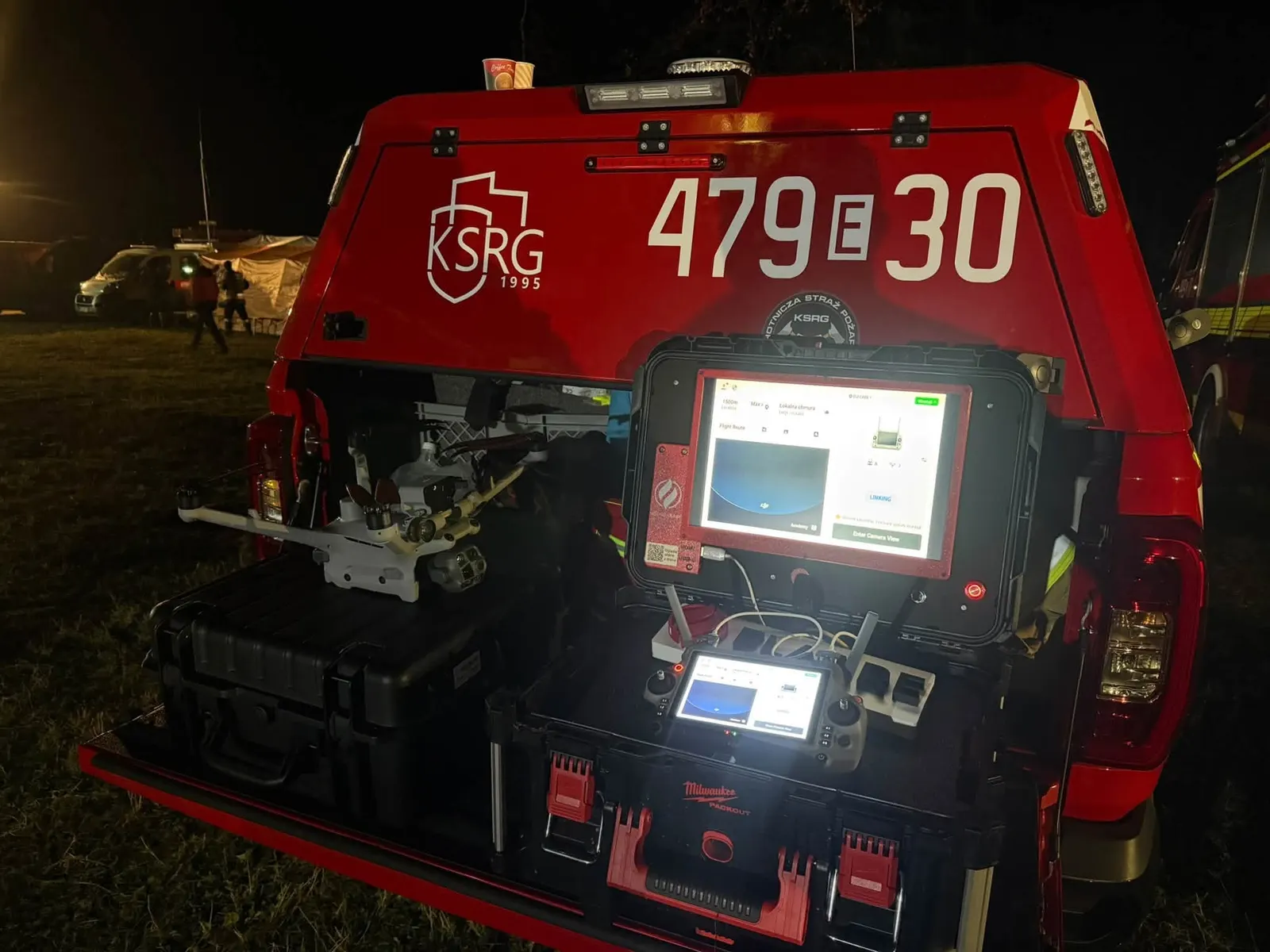
On 17 October 2026 the search and rescue exercise “Wspólny Ślad 2026” (Polish for “shared trail”) took place in Brzostek municipality in south-eastern Poland. It was organised by the volunteer search and rescue group OGPR Podkarpacka SFORA, together with the volunteer fire brigades OSP Zawadka Brzostecka, OSP Łazy Dębowieckie and OSP Korzeniów.
The scenario was a search for eight missing young people in forest terrain. A dozen or so teams with rescue dogs, foot teams, quads and eight drone teams took part.
Who is in charge of all this?
The day began with a training session. The block on unmanned operations was run by speakers from uStrażaka.pl, the distributor of FLAARE for services. The title of the talk said it all: “12 drones, 4 services, 1 SAR operation. Who is in charge of all this?”.
The answer covered the role of the Aerial Operations Coordinator, the division of responsibility between the people directing the operation and the pilots, and safety when a dozen or more aircraft from different organisations are flying over the same area. Less about how to fly, more about how to put it all in order.
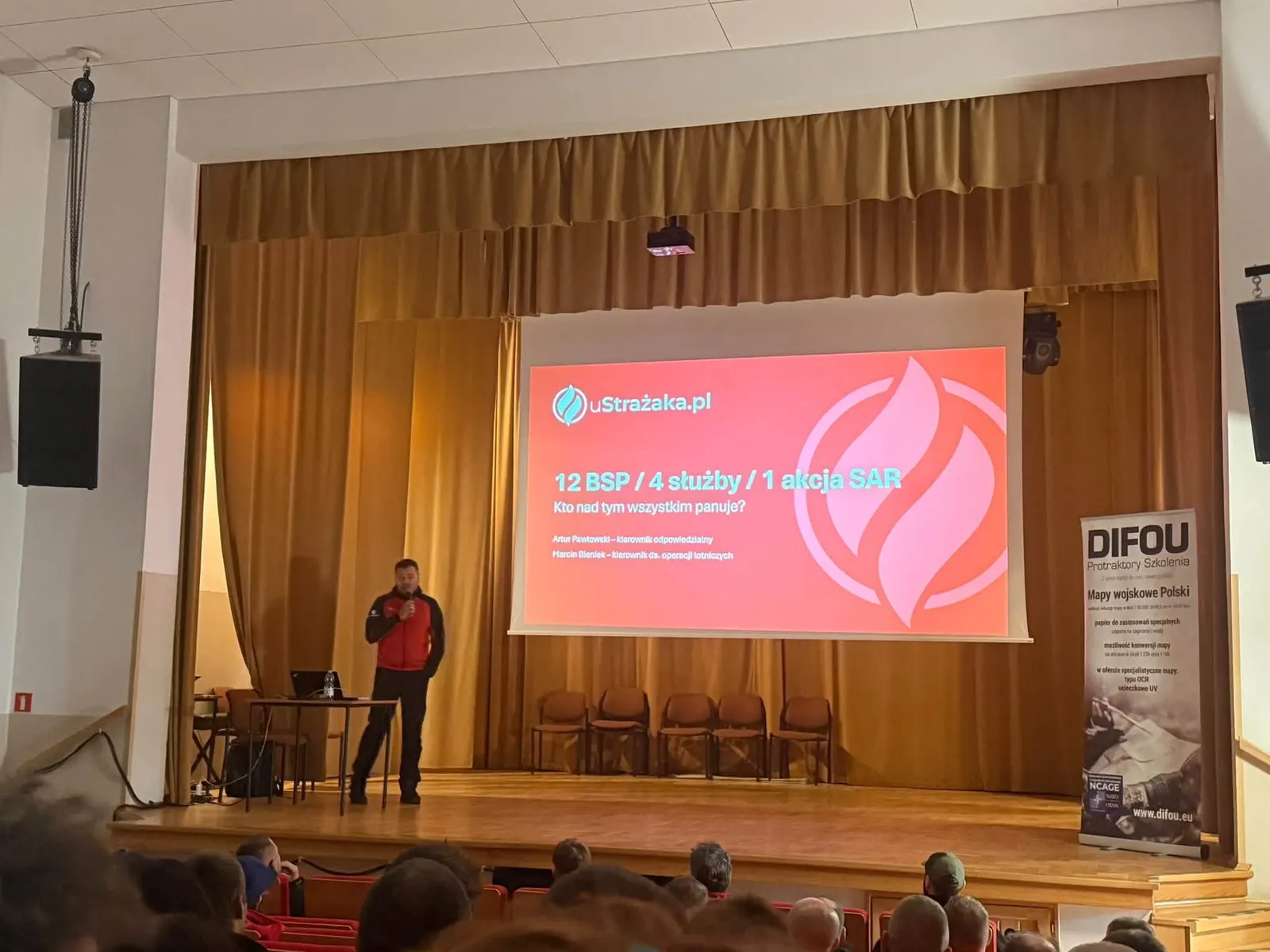
What matters is not only who can fly, but above all who can manage the whole operation.
That is how the uStrażaka.pl team summed up the training in their own report. More drones do not automatically mean a more effective search. They mean more things to keep track of.
Eight drone teams, one map
After the training session the theory moved into the field, and the operation ran until midnight. The drone teams were coordinated in FLAARE. In such a session the Aerial Operations Coordinator sees the drones of every organisation taking part on a single map: who is flying, where and in which direction. Search areas are drawn on the map and assigned to a specific team, and that team’s operator passes them on to the controllers of its pilots.
At the “Codename LAKE 2026” exercise seven drones flew over open water. In Brzostek the drone teams worked over forest, alongside dog teams and foot teams, in a scenario with eight people to find. How a coordination session runs step by step is described in the post KOL in practice.
Taking the load off the command post
In their summary of the exercise the organisers wrote that testing the software in action took the load off the command post, because the procedures shown made the work in the field easier. That sentence captures what flight coordination is for. Not to give the command post one more screen, but to take away the job of watching every drone separately. The pilot focuses on their own area, the coordinator on the whole, and the command post gets the answer to “what is flying and where” without asking over the radio.
Our thanks to OGPR SFORA for the invitation and the chance to test the system in action, to the volunteer fire brigade OSP Bieruń Nowy for the report from its drone team, and to all the units for taking part.
See FLAARE in action
Online presentation, about 30 minutes. No account and no obligations.
Book a demo